


Do Employers Need to Keep Employment Contracts in Australia?
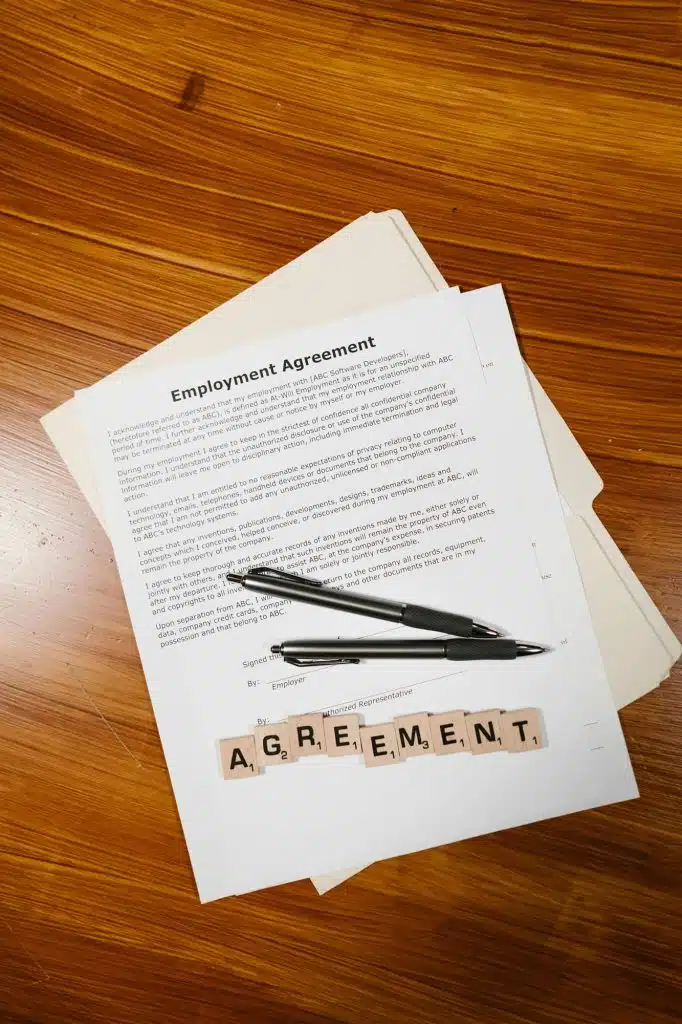
Employment contracts form the legal foundation of an employer and employee relationship. However, we often receive unsigned versions of employment contracts for our clients, or an employer is unable to locate the original employment contract given to an employee.
Under the Fair Work Act 2009 (Cth), employers are required to make and keep employee records for 7 years. If an employee asks to see their employee records, an employer must make them available, even if the request is made after their employment has ceased.
If employee records aren’t made, kept or are incorrect, there can be penalties such as fines.
In the recent case of Hisense Australia Pty Ltd v Naskovski [2026] FCA 20, Hisense was successful on appeal with a court holding that an employment contract is not a type of record that is required to be kept under regulation 3.32 of the Fair Work Regulations 2009 (Cth).
This article will explore what constitutes employee records that should be properly stored and given to employees on request and the impact of this case.

Employee Records
Under section 535 of the Fair Work Act 2009 (Cth), an employer must make and keep for 7 years, employee records of the kind prescribed by the regulations in relation to each of its employees.
Division 3 of the Fair Work Regulations 2009 (Cth) details the type of employee records that should be kept. The following information is classed as an employee record:
- The employee record should specify the rate of remuneration paid to the employee, the gross and net amounts paid to the employee and any deductions made from the gross amount. If the employee is casual or an irregular part-time employee, the record must set out the hours worked by the employee. The records should also specify whether an employee is entitled to an incentive, bonus, loading, penalty rates or other monetary allowances and if so, set out the details of these amounts;
- If a penalty rate or loading is to be paid for overtime hours actually worked by an employee, the employee record must make and keep a record that specifies the number of overtime hours worked each day and when the employee started and ceased working overtime hours;
- Averaging hours. If an employer and employee agree in writing to average the employee’s hours of work, a copy of this agreement must be made and kept;
- If an employee is entitled to leave, a record must be kept of any leave that the employee takes and the balance (if any) of the employee’s entitlement from time to time. Should an employer agree to cash out an employee’s accrued leave, a copy of this agreement must be made and kept and a record must also be made and kept of the rate of payment for the leave that was cashed out and when the payment was made;
- Superannuation contributions. If an employer is required to make superannuation contributions for an employee, a record must be made and kept of the amount of contributions made, the period over which the contributions were made, the date each contribution was made, the name of the funds the contributions were paid to and the basis on which the employer became liable to make the contribution (such as a record of the employee electing a superfund);
- Individual flexibility arrangements. If an employer and employee have agreed in writing to an individual flexibility arrangement, this agreement should be kept and a copy of a notice or agreement that terminates an individual flexibility arrangement should also be kept once it is issued;
- Guarantee of annual earnings. If an employer gives a guarantee of annual earnings, a record of this guarantee must be made and kept. A guarantee of annual earnings is defined under section 330 of the Fair Work Act 2009 (Cth) as a formal agreement between an employer and employee ensuring that the employee will earn at least a specified amount over a year; and
- Termination of employment. If an employee’s employment is terminated, a record of this must be made and kept including whether the employment was terminated by consent, notice, summarily or in some other way (and specifying that matter) and the name of the person who acted to terminate the employment.
As to the form and content of employee records, under regulations 3.31 and 3.32 employee records must be in English, in legible form, be readily accessible to a Fair Work Inspector and specify the employer’s name, employee’s name, whether the employee’s employment is full time or part time, whether they are permanent, temporary or casual, the date when their employment began and their ABN (if any).
There are also provisions in Division 3 of the Fair Work Regulations 2009 (Cth) stipulating what is to happen to employee records where a business is sold/transferred and about the inspection and copying of records.
As we address below, there are no prescribed forms or specific types of documents that must be kept under these regulations.
Employee Request
As mentioned above, an employee is entitled to request a copy of their employee records, even where their employment has ended.
Under regulation 3.42 of the Fair Work Regulations 2009 (Cth), an employer must make a copy of an employee record available for inspection and copying on request by the employee or former employee whom the record relates to.
This copy must be made available in a legible form. If the records are kept at the premises where the employee works/worked, it must be provided within 3 business days of a request or posted to them within 14 days of a request. If it is not kept on site, an employer must make a copy available at the premises or post it to the employee as soon as practicable after receiving the request.
An employer who is asked to make a copy of the records available for inspection must also advise an employee where the records are kept.
Hisense Australia Pty Ltd v Naskovski [2026] FCA 20
In the recent case of Hisense Australia Pty Ltd v Naskovski [2026] FCA 20, it was held that an employment contract is not a type of record that is required to be kept under regulation 3.32 of the Fair Work Regulations 2009 (Cth).
In this appeal case, the judge ruled in favour of Hisense that an employment contract is not a type of record required to be kept on the basis that the Fair Work Act 2009 (Cth) and the Fair Work Regulations 2009 (Cth) do not prescribe the form in which employment details must be kept.
As such, an employer is not required to keep a record of the actual employment contract, provided it has kept records of the relevant information stipulated under the Act and Regulations in some other form. Given this, the employee’s request for their employment contract was not a request for employee records under the act or regulations, and failing to provide the contract was not a breach by Hisense as an employer.
While there may be separate issues associated with being unable to locate a copy of an employment contract, this decision does narrow the scope of employer exposure under the Fair Work Act 2009 (Cth) and the Fair Work Regulations 2009 (Cth) in relation to employee records.
Conclusion
It is still our recommendation that an employer properly store a fully signed copy of all of their employment contracts in one accessible place.
However, this decision does have the effect of narrowing what is classed as employee records and the provisions relating to it under the relevant acts and regulations.
The information in this article is for general purposes only and you should obtain professional advice relevant to your specific circumstances.
Get in touch
If you or someone you know wants more information or needs help or advice in relation to employee records, please contact us.
Related Resources

Employment
New Changes for Casual Employees: Moving to Permanent Employment
This article will explore the details of these reforms and what they mean for employers and employees moving forward.
Read more
Employment
Does your employment contract measure up?
Does your employment contract measure up? If you are entering into an employment contract do you know what should be included? If you are an employer and using an old contract, should it be reviewed first? It is clear contracts should be individually structured to meet the needs of those...
Read more